When pain persists, tissue recovery is slow, or erectile function becomes difficult, patients often look for treatment options that do not involve surgery or long-term medication. Shockwave therapy is one treatment that has attracted increasing attention for these reasons.
Shockwave therapy uses controlled acoustic waves to deliver mechanical energy to a specific area of the body. Depending on the medical condition, this stimulation may encourage biological processes associated with tissue repair, circulation, and remodeling.
In men’s health, a specialized form called low-intensity shockwave therapy has been investigated as a treatment for erectile dysfunction (ED). Research suggests that it may improve erectile function in some men, particularly those whose ED is associated with vascular problems.
However, shockwave therapy should not be presented as a guaranteed cure. The results can vary between patients, and research continues to determine which men are most likely to benefit.
What Is Shockwave Therapy?
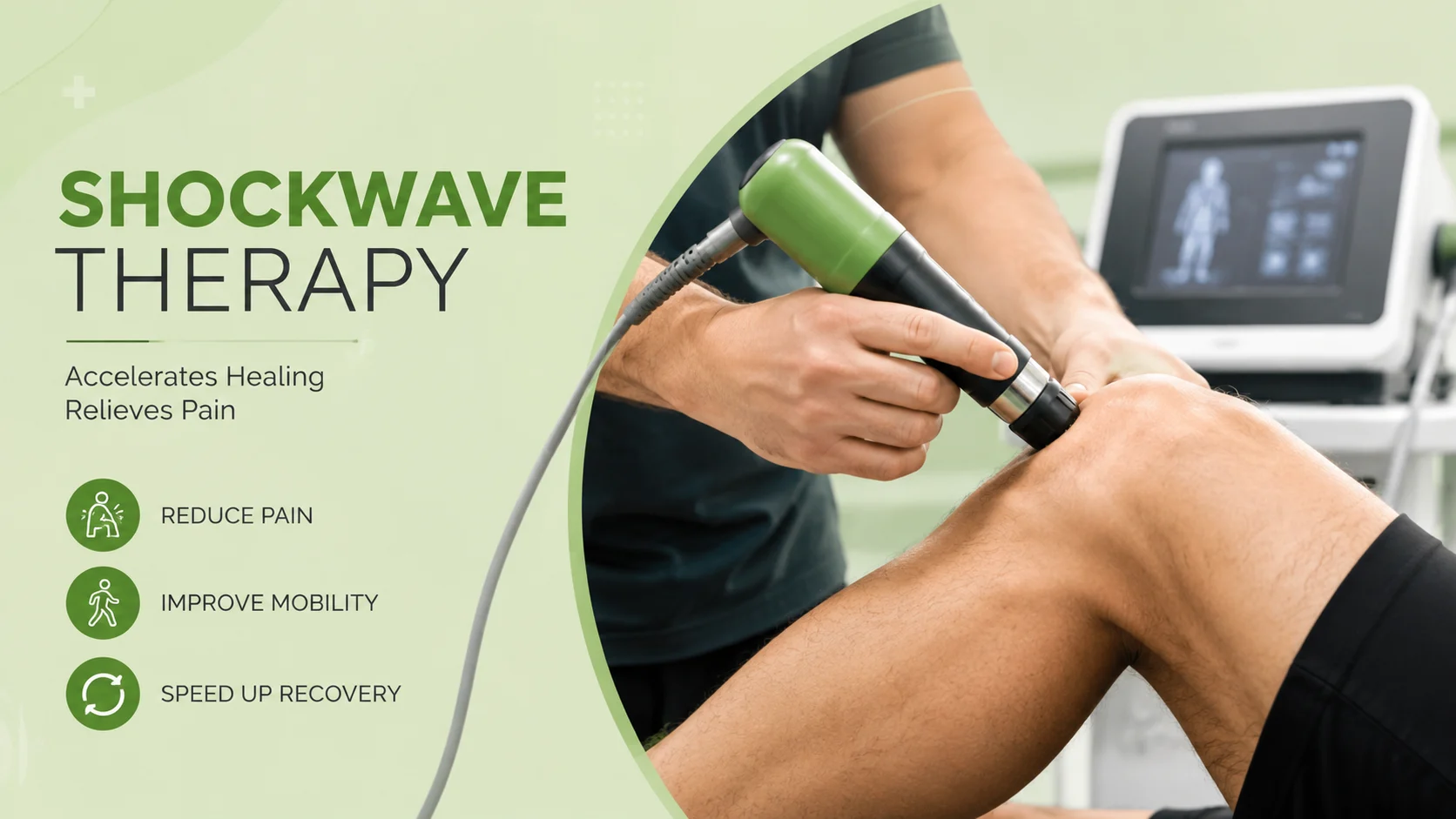
Shockwave therapy, also called extracorporeal shockwave therapy (ESWT), is a non-invasive procedure that uses acoustic waves to stimulate targeted tissues.
During treatment, a handheld device is placed against the skin. The device delivers controlled acoustic energy into the treatment area.
Unlike surgery, shockwave therapy does not require an incision. It also does not generally require injections or a lengthy recovery period.
The technology has been used for different medical purposes, including certain musculoskeletal conditions. Lower-intensity protocols have also been studied in urology, particularly for erectile dysfunction.
The type of shockwave used is important. High-energy shockwaves used for procedures such as kidney-stone treatment are different from the lower-intensity acoustic treatment investigated for ED.
How Does Shockwave Therapy Work?
Shockwaves provide a controlled mechanical stimulus to tissue.
Researchers believe that this stimulation can influence cellular activity and local tissue responses. Depending on the treatment area, proposed effects may include changes in circulation, tissue remodeling, and signaling involved in the body’s natural repair processes.
One mechanism that has received particular attention is angiogenesis, or the development of new blood vessels.
This potential effect is especially relevant to erectile dysfunction because normal erections depend on healthy blood vessels and sufficient blood flow to the erectile tissue.
The precise biological mechanisms of shockwave therapy are still being investigated, and the response may depend on the condition being treated, the equipment used, treatment intensity, and the individual patient.
Shockwave Therapy for Erectile Dysfunction
Erectile dysfunction is the ongoing difficulty of achieving or maintaining an erection adequate for satisfactory sexual activity.
It is a common condition, but its causes can be very different from one person to another.
ED may be associated with:
- Reduced blood flow
- Diabetes
- High blood pressure
- High cholesterol
- Cardiovascular disease
- Smoking
- Obesity
- Certain medications
- Hormonal problems
- Nerve disorders
- Pelvic or prostate surgery
- Psychological or relationship factors
Because blood-vessel health plays an important role in erections, researchers have explored whether low-intensity shockwave therapy can improve erectile function by influencing vascular and tissue responses.
How Could Shockwave Therapy Help ED?
The purpose of low-intensity shockwave therapy for ED is not to mechanically create an erection.
Instead, the treatment is intended to stimulate the erectile tissues and potentially improve processes involved in vascular function.
If blood-vessel function improves, some men may experience better erection quality, firmness, or ability to maintain an erection.
This is one reason the treatment has become an area of interest for men with vasculogenic erectile dysfunction, meaning ED that is substantially related to blood-vessel problems.
What Does the Evidence Say About Shockwave Therapy for ED?
Research into shockwave therapy for ED has produced encouraging findings, but the evidence is not completely consistent.
A 2025 Cochrane review analyzed 21 randomized studies involving 1,357 men. The review found that low-intensity shockwave therapy may provide a small improvement in erectile function in the short term and may improve erectile function over longer follow-up. It also found possible improvements in penile rigidity. However, the researchers rated the certainty of the evidence as low because the studies differed substantially in their methods, treatment protocols, and other characteristics.
A newer 2026 systematic review and meta-analysis of randomized studies also reported improvements in erectile-function measures with low-intensity shockwave therapy compared with control groups.
Taken together, the evidence suggests that shockwave therapy can help some men with ED, but it does not mean that every patient will respond or that the treatment is a guaranteed cure.
Who May Benefit From Shockwave Therapy for ED?
The treatment may be most relevant to men whose erectile dysfunction has a significant vascular component.
A healthcare professional may consider low-intensity shockwave therapy for selected men with:
- Mild vasculogenic ED
- Certain cases of mild-to-moderate vascular ED
- Erectile difficulties associated with cardiovascular risk factors
- Some men who have an inadequate response to PDE5 inhibitor medication
- Men seeking a non-invasive treatment approach
The underlying cause of ED should be assessed before treatment.
For example, if erectile dysfunction is primarily related to severe nerve damage, a major hormonal disorder, medication effects, or psychological factors, another treatment approach may be more appropriate.
What Happens During a Treatment Session?
Shockwave therapy is usually performed in an outpatient clinical setting.
The patient is positioned comfortably, and the treatment area is identified. A coupling gel may be applied to improve contact between the device and the skin.
The healthcare professional then places the applicator against the treatment area and delivers controlled acoustic pulses.
For erectile dysfunction, low-intensity waves are directed toward selected areas of the penile erectile tissue according to the treatment protocol.
The procedure generally does not involve:
- Surgical incisions
- Needles
- General anesthesia
- Hospitalization
A typical treatment plan consists of multiple sessions rather than one appointment. The exact number and frequency of sessions vary because clinical studies have used different protocols.
What Does Shockwave Treatment Feel Like?
Patients may feel a tapping or pulsing sensation as the acoustic waves are delivered.
Low-intensity treatment is generally well tolerated, although some people may experience mild discomfort during a session.
Temporary effects can include:
- Mild tenderness
- Temporary redness
- Increased sensitivity
- Minor discomfort
Patients should inform their healthcare provider if they experience significant or persistent pain.
Main Benefits of Shockwave Therapy
One of the reasons shockwave therapy has become popular is its non-invasive nature.
No Surgery
Treatment is performed externally and does not require surgical incisions.
No Penile Injections for ED
Low-intensity shockwave treatment for ED is delivered through the skin rather than by injecting medication into the penis.
Little Downtime
Most patients can return to their usual activities after treatment.
Targeted Treatment
The acoustic waves are directed toward specific areas rather than affecting the entire body.
Potential Tissue Effects
The treatment is intended to stimulate biological responses rather than simply provide temporary symptom relief.
An Additional Option for ED
For appropriately selected men, shockwave therapy may provide another option alongside established ED treatments.
Shockwave Therapy vs. Traditional ED Treatments
There are several established approaches to erectile dysfunction.
PDE5 inhibitor medications work by enhancing the natural erectile response to sexual stimulation.
Vacuum erection devices use negative pressure to draw blood into the penis and help produce an erection.
Injectable ED medications can directly stimulate an erection and are used in selected patients.
Penile implants are a surgical option for men with severe ED who do not respond adequately to other treatments.
Shockwave therapy works differently. Its purpose is to stimulate tissue and potentially improve the underlying vascular response over time.
This means that shockwave therapy should not automatically be viewed as a replacement for established treatments. Depending on the patient, it may be considered as an additional or alternative treatment after medical evaluation.
Is Shockwave Therapy a Cure for ED?
It is better to describe shockwave therapy as a potential treatment option rather than a guaranteed cure.
Some men may experience meaningful improvement, while others may experience little or no change.
The reason is simple: erectile dysfunction has multiple possible causes.
A treatment that may help a man with vascular ED may not have the same effect on ED caused primarily by nerve damage, severe hormonal problems, medication side effects, or psychological factors.
Long-term results may also depend on whether the underlying risk factors are addressed.
Why Cardiovascular Health Matters
Erectile function and cardiovascular health are closely connected because both depend on healthy blood vessels.
Risk factors such as high blood pressure, diabetes, smoking, obesity, and high cholesterol can damage vascular function.
Persistent ED can therefore be an important reason to discuss overall health with a healthcare professional.
Rather than treating erectile difficulties in isolation, a comprehensive evaluation may include assessment of:
- Blood pressure
- Blood glucose
- Cholesterol
- Cardiovascular risk
- Medication use
- Lifestyle factors
- Hormonal health when indicated
- Sexual and medical history
Improving cardiovascular health may support both general wellbeing and sexual function.
How Many Sessions Are Required?
There is no universally agreed number of shockwave therapy sessions for ED.
Different studies have used different:
- Treatment schedules
- Energy levels
- Numbers of sessions
- Treatment sites
- Types of devices
This variation is one of the limitations of the current evidence.
A qualified provider should determine the treatment plan based on the patient’s condition and the equipment being used.
Patients should be cautious about claims that a particular number of sessions guarantees a specific result.
When Will Results Appear?
Shockwave therapy is not generally designed to produce an immediate erection like an ED medication taken before sexual activity.
If treatment is effective, changes may develop gradually.
The time required can vary between patients. Some men may notice improvement during or after a treatment course, while others may require follow-up before determining whether the treatment has made a meaningful difference.
There is no scientifically reliable way to promise a specific improvement within a specific number of days.
Is Shockwave Therapy Safe?
Low-intensity shockwave therapy appears to be generally well tolerated in clinical research.
The 2025 Cochrane review found little to no difference in treatment-related adverse events between low-intensity shockwave therapy and sham treatment, although the certainty of this evidence was low.
As with any medical treatment, safety depends on appropriate patient selection, equipment, treatment settings, and professional supervision.
A qualified healthcare professional should assess whether shockwave therapy is appropriate before treatment begins.
What Should Patients Ask Before Treatment?
Anyone considering shockwave therapy should ask the provider several important questions.
What type of device is being used?
Different devices may use different forms of acoustic energy.
Is it specifically designed for low-intensity ED treatment?
The provider should explain exactly what technology and protocol are being used.
What evidence supports the treatment?
A reputable clinic should be able to discuss the evidence without making unrealistic promises.
Am I a suitable candidate?
A proper assessment should consider the likely cause of ED rather than treating every patient with the same protocol.
What are my alternatives?
Patients should understand established ED treatments and how they compare with shockwave therapy.
What happens if I do not respond?
A responsible provider should explain alternative options rather than promising success.
Warning Signs of Misleading Shockwave Therapy Advertising
Interest in shockwave therapy has also resulted in aggressive marketing.
Patients should be cautious about advertisements claiming:
- “100% success”
- “Permanent cure”
- “Guaranteed results”
- “One treatment is enough”
- “Works for every type of ED”
- “No medical evaluation required”
The scientific evidence does not support such universal claims.
A trustworthy provider should explain that treatment response varies and that shockwave therapy is most relevant to particular patient groups.
Frequently Asked Questions
What is shockwave therapy?
Shockwave therapy is a non-invasive treatment that delivers controlled acoustic waves to targeted tissues. It is used for several medical applications and has also been studied for erectile dysfunction.
Is shockwave therapy good for ED?
It may help selected men with erectile dysfunction, particularly men whose ED is related to vascular dysfunction. Clinical research has reported improvements in erectile-function measures, although the certainty of the evidence remains limited.
Does shockwave therapy permanently cure ED?
There is not enough evidence to promise a permanent cure. Some men improve, while others may see limited or no benefit.
Is shockwave therapy painful?
Most low-intensity treatments are well tolerated. Patients may feel tapping or mild discomfort during treatment.
Does shockwave therapy require surgery?
No. The treatment is performed externally and does not require surgical incisions.
Does it require injections?
Low-intensity shockwave therapy for ED does not require medication to be injected into the penis.
How many sessions are needed?
The number varies according to the treatment protocol. There is no single universally accepted schedule.
Can shockwave therapy be combined with ED medication?
In some patients, it may be possible to use different treatment approaches together, but this should be determined by a healthcare professional based on the individual’s condition and medications.
Is shockwave therapy suitable for everyone?
No. The likely cause of ED, overall health, medications, and other medical factors should be considered before treatment.
Final Thoughts
Shockwave therapy is an innovative, non-invasive treatment that uses acoustic energy to stimulate targeted tissues. Its potential role in erectile dysfunction has attracted considerable interest because of its possible effects on vascular function and erectile tissue.
Current evidence suggests that low-intensity shockwave therapy may improve erectile function in some men, particularly those with a vascular component to their ED. However, the benefit may be modest, results vary between individuals, and the certainty of evidence remains low.
For this reason, shockwave therapy should be viewed as a potential treatment option rather than a guaranteed cure.
The best starting point for a man experiencing persistent erectile dysfunction is a proper medical evaluation. Understanding the underlying cause makes it easier to choose an appropriate treatment and address important health factors that may be contributing to ED.
For appropriately selected patients, shockwave therapy can be a promising non-invasive approach to erectile dysfunction, particularly when vascular health plays an important role.